How Long After Heifer Calves B4 Bred Again
Calving Time Management for Beef Cows and Heifers
- Jump To:
- Recognize Normal Calving
- The Iii Stages of Parturition
- Dystocia
- Ready Before Helping
- Signs of Impending Calving in Cows or Heifers
- When and How to Examine the Moo-cow
- Proper Placement of Obstetrical Bondage
- Forced Extraction of the Calf
- Anterior Presentation
- Posterior Presentation
- Other Ideas on Pulling Calves
- Abnormal Presentations
- Rotating the Calf at Parturition to Aid in Delivery
- Prolapses
- Summary
- References
Calf losses at calving time are often a issue of dystocia (difficult calving) bug. Many of these losses occur to calves built-in to first calf heifers and can be prevented if the heifers and cows are watched closely and the dystocia issues detected and corrected early. A veterinarian should handle serious and complicated calving issues. Ranchers must apply good judgment in their decisions as to which bug volition require professional help, and the earlier help is sought the greater the survival rate of both cow and calf.
Recognize Normal Calving
If the calf is usually presented (Effigy 1) and the pelvic area is large plenty, the vast majority of animals will requite birth without aid. Recognizing a normal calving is merely as important as knowing when a calving is abnormal. This way you will not requite help when it is not needed.
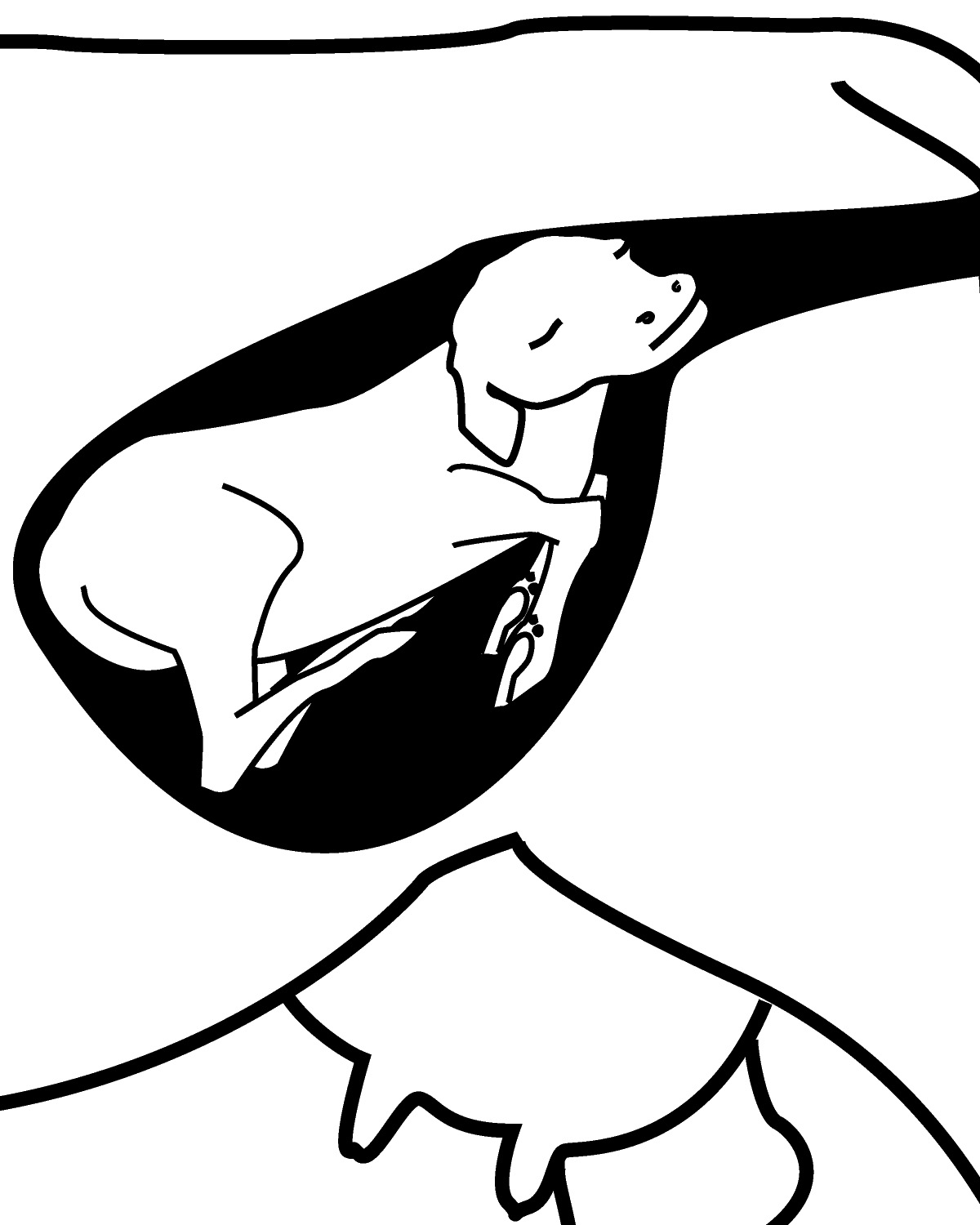
Figure ane. An anterior presentation
The 3 Stages of Parturition
Stage 1
The commencement stage of parturition is dilation of the cervix. The normal cervix is tightly closed right upwards until the cervical plug is completely dissolved. In phase i, cervical dilation begins some four to 24 hours earlier the bodily nascency. During this time the progesterone block is no longer nowadays and the uterine muscles are condign more sensitive to all factors that increment the charge per unit and strength of contractions. At the beginning, the contractile forces primarily influence the relaxation of the cervix but uterine muscular action is nevertheless rather quiet. Phase 1 is likely to go completely unnoticed, just there may be some behavioral differences such as isolation or discomfort. Near the cease of phase 1 ranchers may observe elevation of the tail, switching of the tail, and increased mucous discharge.
Stage 2
The second stage of parturition is defined as the commitment of the newborn. Information technology begins with the entrance of the membranes and fetus into the pelvic culvert and ends with the completed birth of the calf. The 2nd stage is the i producers are really interested in because this is where all the action is. Clinically the onset of stage 2 is marked by the advent of membranes or water bag at the vulva. The traditional texts, fact sheets, magazines, and other publications country that phase two in cattle lasts from ii to four hours. Data from Oklahoma State University and the USDA experiment station at Miles Urban center, Montana, would indicate that stage 2 is much shorter being approximately one hr for heifers and half 60 minutes for adult cows. See When and How to Examine a Cow on folio iii. In heifers, not just is the pelvic opening smaller, only also the soft tissue has never been expanded. Older cows have had deliveries before and birth should go quite rapidly unless there is some aberration such as a very big dogie, backwards dogie, leg back, or twins.
Stage 3
The third stage of parturition is the shedding of the placenta or fetal membranes. In cattle this normally occurs in less than eight to 12 hours. The membranes are considered retained if after 12 hours they accept non been shed. Years agone it was considered necessary to remove the membranes past manually unbuttoning the attachments. Research has shown that transmission removal is detrimental to uterine health and future conception rates. Administration of antibiotics usually will guard against infection and the placenta will slough in four to seven days. Contact your veterinarian for the proper direction of retained placenta.
Dystocia
What is dystocia or a hard birth? Traditionally, it is any birth that has needed assistance. Co-ordinate to that definition, any unassisted birth was a normal nativity, merely by the definition an unassisted nativity could still consequence in weak or dead calf at birth. A more mod definition of dystocia would be a birth that needs help or results in a weakened or dead calf or injury to the dam.
Causes of Dystocia
What are the causes of dystocia? Most mutual is relative fetal oversize, which could be defined as a calf besides large, pelvis too pocket-size, or both. Every bit for calving difficulty, prevention is worth a pound of cure. Proper sire option is a cardinal to preventing calving difficulty. Underdeveloped heifers and heifers bred to bulls with large birth weights are both factors that crusade increased incidence of hard births. The second nigh prevalent cause is abnormal presentation or position. The normal presentation in cattle is inductive presentation or head starting time and the normal position would be correct side up with head and fore limbs extended into the pelvic canal. Whatsoever position that involves the calf's head turned back or one of the legs turned back is abnormal. Think a normal delivery cannot be achieved unless the head and both front end limbs are presented into the pelvic canal and on through the vulva. A tertiary cause of dystocia would be lack of uterine contractions or uterine fatigue. The causes of this are complex and not completely understood. Sometimes hormonal imbalances may result in the cervix not beingness completely dilated or uterine contractions non occurring frequently or strongly enough. Low calcium levels such as seen with milk fever or grass tetany may be responsible. In any instance those problems usually require the assistance of a veterinarian to right. Other causes of dystocia are twins or genetic mistakes (fetal monsters).
Effects of Dystocia on the Dogie
What are the furnishings of dystocia or difficult nativity on the dogie? Obvious to everyone is a dead calf at nativity or one killed during the assistance procedure. Boosted effects include trauma such as leg fractures, ruptured diaphragm, and nervus damage due to excessive pulling, improper placement of bondage, or the evolution of a hiplock. A tertiary and profoundly overlooked upshot is a weak calf, sometimes chosen weak dogie syndrome, which may be brought on by a prolonged stage 2. This is due to increased time exposed to increased force per unit area associated with increased uterine contractions and straining of the dam.
A prolonged stage two with no progress in delivery of the calf is going to event in decreased oxygen and increased carbon dioxide to the fetus. Such calves do not have normal respiratory efforts. They do not have stiff gasping and panting efforts. They do not have rapid respiration or centre rates necessary to distribute oxygen to the tissues and carbon dioxide dorsum to the lungs. Lactic acid and carbon dioxide levels remain quite high. These calves are depressed, they do not sit upwards well, they exercise not shake their heads and ears, and if atmospheric condition is common cold they do non shiver to warm themselves. Shivering increases metabolism, which increases oestrus. These calves have poor metabolism to begin with and their body temperature consequently drops. Even those that first appeared to breath and sit down upwardly ordinarily soon become depressed, are slow to rise, and are tedious to nurse. Many exercise not nurse without assistance and dice within 12 to 24 hours. Fifty-fifty those that do nurse, may nurse too late for good antibody absorption. In summary, the effect of dystocia is not just dead calves and injured heifers, but likewise weak and sick calves.
Furnishings of Dystocia on Post-calving Fertility
In improver to being the greatest cause of baby calf mortality, calving difficulty markedly reduces reproductive performance during the next breeding season.
Results from a Montana study (Doornbos, et al., 1984) showed that heifers receiving assistance in early stage two of parturition returned to estrus before in the post-calving menstruation and had higher pregnancy rates than heifers receiving traditionally accustomed obstetric assistance (Figure 2). In this study heifers were either assisted when the fetal membranes (h2o bag) appeared (Early on) or were immune to progress ordinarily and assisted simply if calving was not completed within two hours of the appearance of the water purse (Belatedly).
Heifers that were immune to suffer a prolonged labor had a 17% lower rate of cycling at the start of the next breeding season. In addition, the rebreeding percentage was 20% lower than the counterparts that were given assistance in the kickoff hour of labor.
Prolonged deliveries of babe calves (in excess of one to 1 and a half hours) often event in weakened calves and reduced rebreeding performance in young cows.
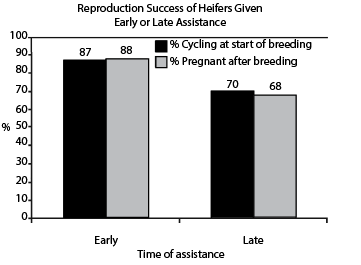
Figure 2. Impact of early on or late assistance in subsequent rebreeding functioning of showtime dogie heifers. Doornbos, et al. 1984.
Prepare Before Helping
- Equipment: Before calving season starts do a walk through of pens, chutes, and calving stalls. Make certain that all are clean, dry, potent, safe, and performance correctly. This is a lot easier to do on a sunny afternoon than on a cold dark night when yous need them.
- Protocol: Earlier calving flavour starts develop a plan of what to exercise, when to exercise information technology, who to call for help (along with phone numbers), and how to know when yous need help. Brand sure all family unit members or helpers are familiar with the program. It may help to write it out and post copies in user-friendly places. Talk to the local veterinarian almost the protocol and incorporate his/her suggestions. Your veterinary will be a lot more helpful when yous accept an emergency during the kids' school programme if y'all have talked a few times during regular hours.
- Lubrication: Many lubricants take been used and one of the best lubricants is probably the simplest – non-detergent lather and warm water.
- Supplies: The stockman should ever have in his medicine chest the following: dispensable obstetrical sleeves, not-irritant clarified, lubricant, obstetrical chains (60 inch and/or two 30 inch chains), two obstetrical handles, mechanical calf pullers, and injectable antibiotics. Do not forget the simple things like a skillful flashlight with extra batteries and some quondam towels or a roll of newspaper towels. It may be helpful for you to accept all these things and other items yous may want to include packed into a 5 gallon bucket to make upwardly an obstetrical kit so you tin can grab everything at once.
Signs of Impending Calving in Cows or Heifers
As the calving season approaches, the cows will show typical signs that will indicate parturition is imminent. Changes that are gradually seen are udder development or making purse and the relaxation and swelling of the vulva or springing. These indicate the moo-cow is due to calve in the most future. There is much difference between individuals in the development of these signs and certainly age is a factor. The first dogie heifer, peculiarly in the milking breeds, develops udder for a very long fourth dimension, sometimes for 2 or three months before parturition. The springing can be highly variable too. Most people notice that Brahman influence cattle seem to spring much more than does a Holstein.
Typically, in the immediate ii weeks preceding calving, springing becomes more evident, the udder is filling, and ane of the things that might exist seen is the loss of the cervical plug. This is a very thick tenacious, mucous fabric hanging from the vulva. Information technology may exist seen pooling behind the cow when she is lying downwards. Some people mistakenly recollect this happens immediately earlier calving, but in fact this tin can be seen weeks before parturition and therefore is only another sign that the calving season is here.
The immediate signs that usually occur within 24 hours of calving would exist relaxation of the pelvic ligaments and strutting of the teats. These can be fairly dependable for the owner that watches his cows several times a day during the calving flavor. The casual observer or even the veterinarian who is knowledgeable of the signs but sees the herd infrequently cannot accurately predict calving time from these signs. The relaxation of the pelvic ligaments actually cannot exist observed in fat cows (body condition score 7 or greater). However, relaxations of the ligaments can exist seen very clearly in thin or moderate body condition cows and tin exist a sign of impending parturition inside the next 12 to 24 hours. These changes are signs the producer or herdsman tin can use to more than closely pinpoint calving time. Strutting of the teats is not really very dependable. Some heavy milking cows will take strutting of the teats as much as two or three days before calving and on the other mitt, a sparse poor milking cow may calve without strutting of the teats.
Some other thing that might exist seen in the immediate 12 hours before calving would be variable behavior such as a cow that does non come up to eat or a cow that isolates herself into a particular corner of the pasture. However, most of them have few behavioral changes until the parturition procedure starts.
When and How to Examine the Moo-cow
It is important to know with complete confidence exactly when and how long to get out the moo-cow and when to seek help. An issue facing the rancher at calving time is the corporeality of time heifers or cows are allowed to be in labor earlier assistance is given. Traditional textbooks, fact sheets, and mag manufactures state that stage 2 of labor lasted from two to 4 hours. Stage 2 is defined as that portion of the birthing process from the first appearance of the water bag until the baby dogie is delivered. Data from Oklahoma Country University and the USDA experiment station at Miles Urban center, Montana, clearly show that stage 2 is much shorter, lasting approximately 60 minutes in start calf heifers and 30 minutes in mature cows (Tabular array i).
In these studies, heifers that were in phase two labor much more than one hour or cows that were in phase 2 much more than than 30 minutes definitely needed help. Research information also shows that calves from prolonged deliveries are weaker and more disease prone, fifty-fifty if born live. In addition, cows or heifers with prolonged deliveries render to heat afterward and are less likely to be bred for the side by side calf crop. Consequently a good dominion of pollex: If the heifer is not making significant progress i hour after the water pocketbook or anxiety announced, examine the heifer to see if you can provide assistance. Mature cows should exist watched for only thirty minutes earlier a vaginal examine is conducted. If yous cannot safely deliver the calf yourself at this time, call your local veterinary immediately.
Virtually ranches develop heifers fully and employ calving ease bulls to prevent calving difficulties. Still, a few difficult births are going to occur each calving season. Using the concept of evening feeding to get more than heifers calving in daylight and giving assistance early will relieve a few more than calves. This results in healthier more productive two-year cows to rebreed next twelvemonth.
If nothing is showing later on a period of intensive straining of second-stage labor – a catamenia of approximately 30 minutes in a cow and hr in a heifer – then examine her to decide if presentation is normal. Wash the vulva, anus, and the area in between using soap and warm water. Using a disposable sleeve (shoulder length) and a good lubricant (usually available from your veterinary), insert your mitt slowly and do not rupture the waterbag. If the dogie's presentation is not an inductive (Figure i) or posterior position (Figure iii) or if the calf is very large or the heifer small, you may desire to seek professional help.
Table ane. – Research results for length of stage 2 parturition.
| Study | No. of animals | Length of stage 2 |
|---|---|---|
| USDA (Montana)* | 31 mature cows | 22.5 minutes |
| USDA (Montana)* | 29 first calf heifers | 54.1 minutes |
| Oklahoma State University** | 35 offset calf heifers | 55.0 minutes |
*Doornbos, et al. 1984. JAS: 59:1
**Putnam, et al. 1985. Therio: 24:385
Proper Placement of Obstetrical Chains
To properly employ obstetrical chains when assisting with a difficult birth, follow the instance in Figure 4. To attach the chain, loop it effectually the thin part of the leg above the fetlock. And then, make a half hitch and tighten it below the joint and higher up the foot. Make certain that the concatenation is positioned in such a manner that it goes over the top of the toes. In this mode the pressure is applied and then equally to pull the abrupt points of the calf's hooves away from the soft tissue of the vaginal wall.
Forced Extraction of the Calf
Information technology is very important at all times to exert force per unit area merely when the animal strains and to relax completely when the patient relaxes. The old idea of maintaining a steady pressure level during aid is incorrect, unless the cow has already given up and no assistance is coming from her.
Excessive or improper pressure often causes injuries to the dam such as vaginal tears, uterine rupture, paralysis, or uterine prolapse. All can normally be prevented merely when they occur they need the firsthand attention of your veterinarian.
Vaginal tears generally heal with proper antibiotic therapy. Uterine rupture usually results in expiry. Some animals volition recover from calving paralysis but may require prolonged care and may not breed over again.
Pulling on a calf should just be done when the presentation and posture of the calf are normal. This applies both to an anterior position (Figure i) and a posterior position (Figure 3). Excess force should never be used in pulling a calf. In about cases, no more than two men should be allowed to pull and and so only when the cow strains. Lubricant and patience volition ofttimes solve the tightest case. Use extreme caution if a mechanical puller is being used.
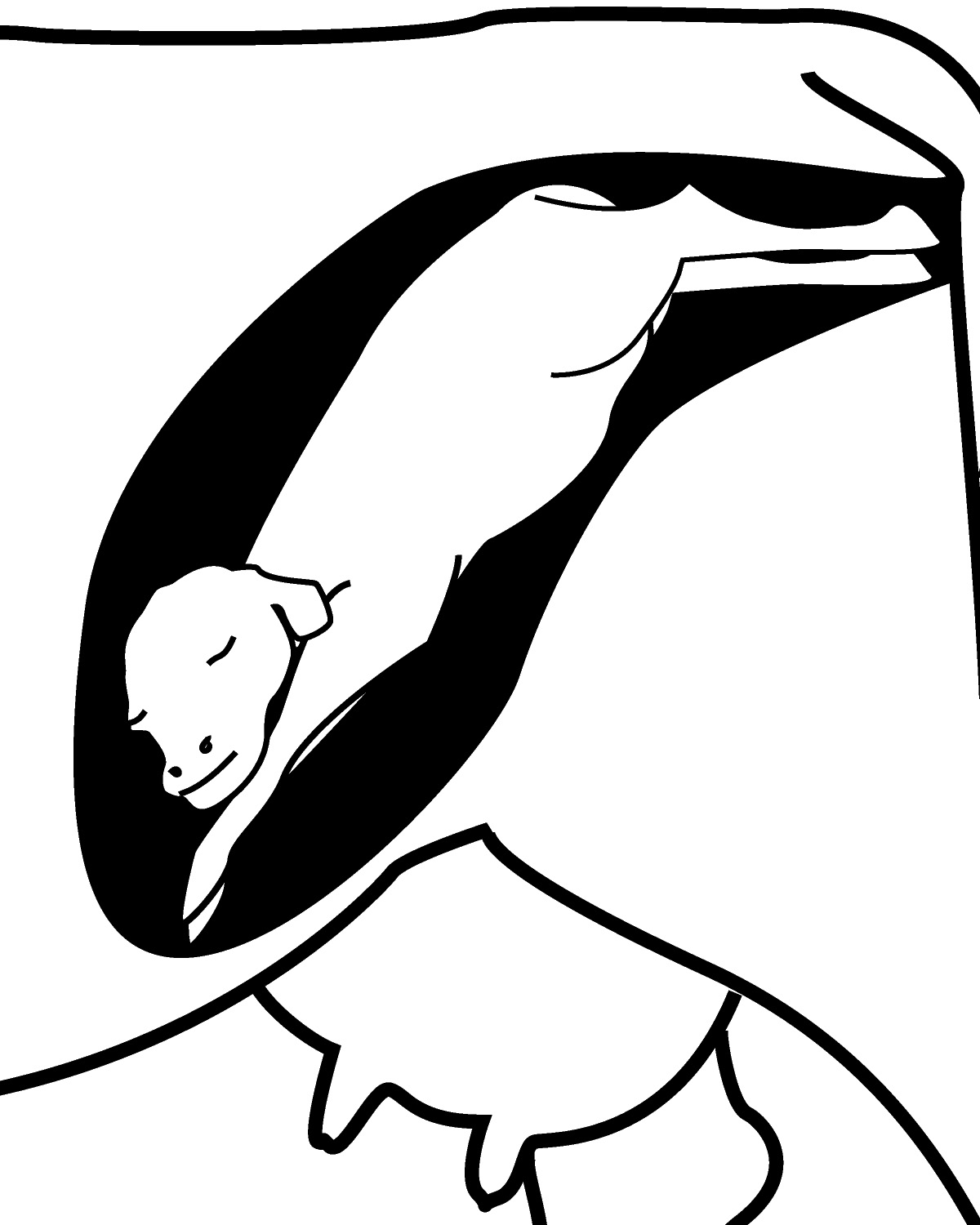
Figure 3. A posterior presentation
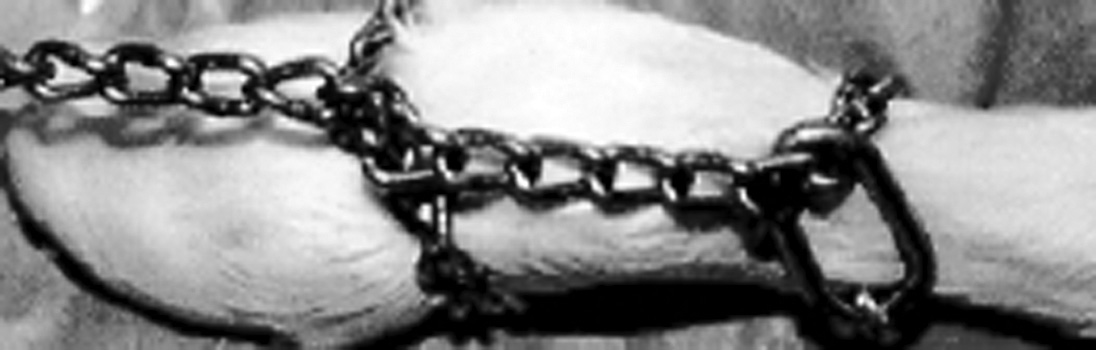
Effigy 4. Place loop to a higher place and halfhitch beneath fetlock joint. Connecting chain should be on the height of the leg.
The beginning step is to examine the cow to bank check calf position and determine if assistance is necessary. It is generally easier to right any abnormal presentation if the cow is standing. If a cow or heifer will non get upwardly, she should exist so placed that she is not lying straight on the part of the calf which has to be adjusted. Thus, if the calf's caput is turned back toward the cow's right flank, the cow should be made to lie on her left flank and then that the calf'south head is uppermost. This provides more room in the uterus for manipulation.
Once the calf is in a right anterior or posterior position, delivery will be easier if the moo-cow is lying down. When the calf's limbs are located, observe out whether they are forelimbs or hindlimbs. To practise this start by feeling the fetlock and moving the hand up the limb. In the hindlimb the next articulation is the hock with the prominent point. In the forelimb at that place is too a prominent point, the indicate of the elbow, merely before this is reached one can feel the knee joint, which is flat and has no prominences.
The calf may exist alive or dead. Sometimes movements can be detected in a live dogie past placing the fingers in the mouth, seizing the tongue, or touching the eyelids.
If the genital passage of the cow is dry or if the dogie itself is dry, enough of lubricant should be used. Attempts to repel (push dorsum) the calf should be made betwixt labor pains. Similarly, attempts to deliver the dogie by traction will be a lot easier if they are fabricated to coincide with the contractions of the cow.
Inductive Presentation
An anterior presentation is forefeet starting time, head resting on the limbs, and the eyes level with the knees (Figure 1). As stated above, in this presentation the moo-cow does not unremarkably require assistance, unless it is a heifer at first calving, the calf is dead, or the calf is too big for the cow.
If the dogie is dead, necktie a chain around the head backside the ears and pass information technology through the mouth. This will prevent the head from twisting when the limbs are being pulled. With a alive calf y'all tin can exercise this by placing a paw on the head and ensuring that the caput is kept straight. Traction should not exist exerted simultaneously on the head and limbs until the head enters the pelvis. A large calf, with shoulders too wide for the pelvis, is sometimes held up at this stage. If and so, pull one limb only so that the elbow and shoulder of one limb only enter the pelvis. Then, while the pull on the limb is continued, the other limb is treated in the same way until both feet project as from the genital passage. At present apply traction on both limbs and on the head until the head protrudes from the vulva, and from this phase the principle traction is exerted on the limbs again.
It tin be seen that traction on both limbs at the same time volition upshot in both shoulders entering the pelvis at once. If the shoulders of a wide-chested calf can be fabricated to enter on a slant and can be pulled through in that position, delivery will be fabricated easier.
Important: Traction on the calf in the early stages should be exerted upwardly (in the direction of the tailhead) and not downward. In one case the calf is in the pelvic crenel, traction should be straight astern and so downward. The dogie thus passes through the nascency canal in the course of an arc.
If the passage of the hind end of the calf presents whatsoever difficulty, the body of the calf should be grasped and twisted to an angle of about 45 degrees. Delivery is then made with the dogie half-turned on its side. This allows for easier passage of a calf with well-developed stifle joints.
Sometimes a dogie gets stuck at the hips (hiplock). Exercise not just pull, rotate the calf every bit described to a higher place or attempt turning the moo-cow onto her back, then over onto the side opposite to the 1 you lot constitute her on and endeavor some gentle aid.
Posterior Presentation
In a posterior presentation, both the hindfeet are presented with the dogie'due south spine upward toward the cow's spine (Figure three), and the sole or bottom of the hooves will confront upward. In a normal inductive presentation (head and forelimbs first) the hooves are downward. If the calf is on its dorsum, however, the position of the hooves is reversed in each of these presentations.
In the posterior presentation, the caput is the final part to be expelled, and there is a gamble of suffocation or brain damage due to lack of oxygen. Delivery should be as quickly as possible past traction on the hind legs. Traction should be exerted on i limb until the corresponding stifle articulation has been fatigued over the pelvic brim. Information technology may exist necessary to push the other limb partly back into the uterus at the aforementioned time. In this way the two stifle joints volition enter separately into the pelvis and aid easier delivery.
Afterwards the offset limb has been drawn back sufficiently, traction should be practical to both limbs simultaneously. If this does not succeed, cross ane limb over the other and pull on the lower limb. This will make the calf rotate slightly to one side and delivery will keep more than smoothly.
The calf's tail may have a tendency to protrude upward and impairment the height of the vagina. Be sure the tail is down between the legs by placing your hand on the tailhead while the calf is entering the pelvic crenel.
After delivery of posterior presentation, more than careful attention should exist given to removal of mucus from the mouth and nose because of a greater danger of suffocation than in an anterior presentation. A stiff straw should be used to briskly tickle the nostril of the newborn. This will stimulate the calf to snort, sneeze or cough and inhale air into the lungs to brainstorm breathing every bit soon as possible.
Other Ideas on Pulling Calves
The chain should exist tightly fastened above the fetlocks with a half-hitch below the fetlock before applying traction in anterior or posterior presentations. If information technology becomes necessary to pull on the jaw or head, try to do it by paw or utilise a soft cotton fiber or nylon rope beingness careful not to apply excessive pull so as non to fracture the jaw or damage the spinal string. If a rope is used utilise the rope behind the poll and through the oral cavity. Protect the birth canal from laceration by the precipitous teeth by guiding the caput with your hand. After the head and neck have passed through the neck, traction should exist applied to the legs only.
Traction should be applied in a steady, even manner. Jerky, irregular pulls are painful and unsafe. Only pull when the moo-cow is straining. If yous are pulling and a sudden obstruction occurs, stop and examine the birth canal and calf to find out what is wrong earlier proceeding. To avoid lacerations to the soft nativity canal, time should be immune for enlargement of the nascence canal equally the calf advances.
Abnormal Presentations
The following figures illustrate presentation of the dogie other than anterior or posterior presentations.
Two Front Legs Presented: Head Retained
If the head cannot be felt, practise not assume the calf is coming backward. The two front legs may be presented and the head retained (Figure v). Before pulling on the limbs, distinguish betwixt forelimbs and hindlimbs equally described earlier. Where the head is bent dorsum into the right flank of the moo-cow it will exist easier to right if the left hand is used and vice versa. Past grasping the muzzle, the ear, or the lower jaw; or by placing the thumb and middle finger in the center sockets, the head can be raised and directed into the pelvis. Do not pull hard on the jaw because the jaw can be easily cleaved.
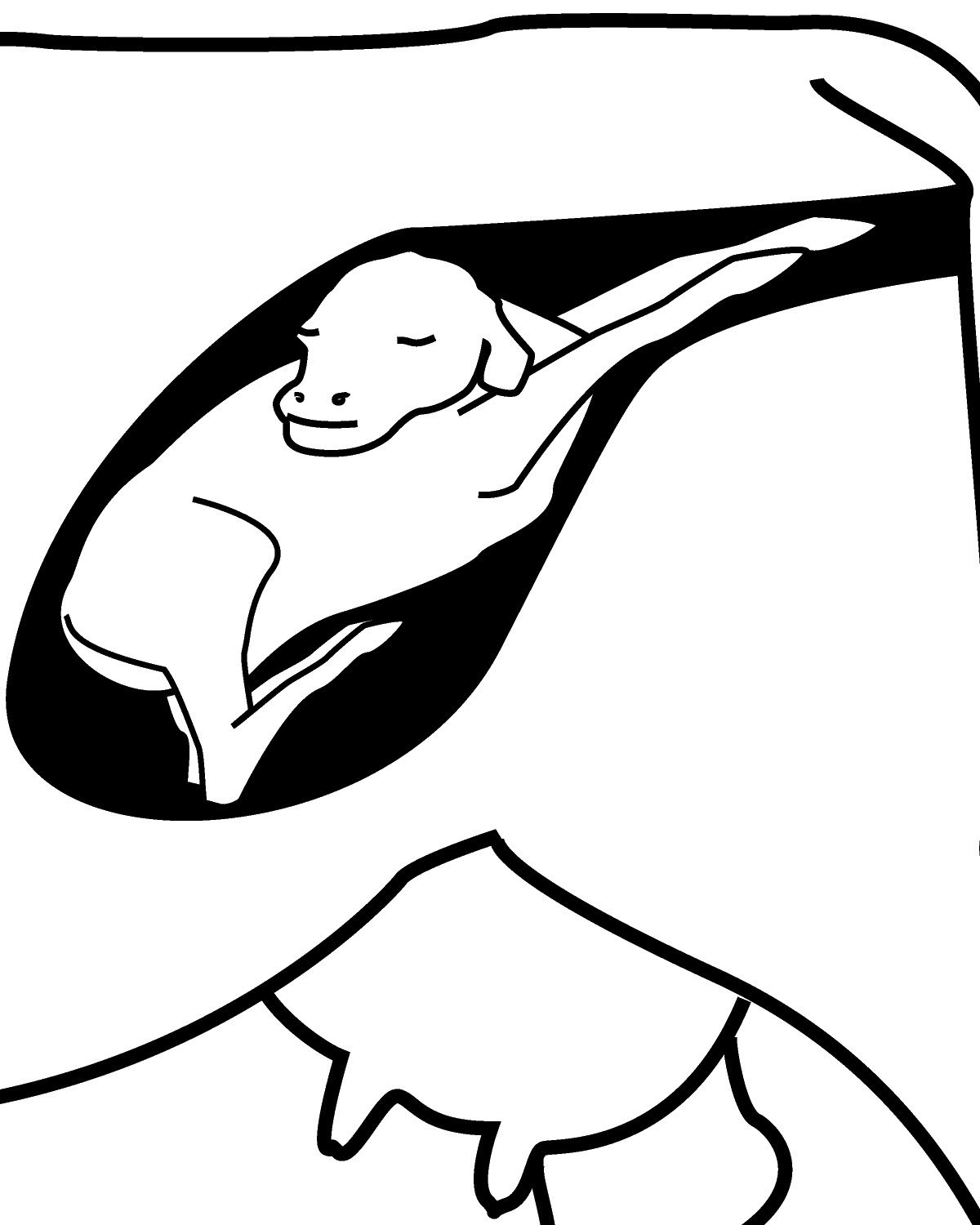
Effigy 5. Ii forepart legs presented with head back
In all these cases, the head can exist brought up and straightened more than easily if the body of the calf is at the same time pushed farther back in the uterus. This tin can be washed by placing the hand betwixt the front legs and pushing dorsum the chest, the caput existence pulled at the same time with aid of a chain placed on the lower jaw. Try to carry out all these operations when the cow is not straining vigorously.
Head Between Forelegs
Sometimes the head falls well down betwixt the legs (Effigy 6). Replace one or both limbs into the uterus to raise the head by one of the methods described in a higher place.
Some other method is to turn the cow on her back. The head of the calf volition fall toward the cow's spine and then can be more easily guided into the pelvis by a hand alone or else by a loop around the lower jaw.
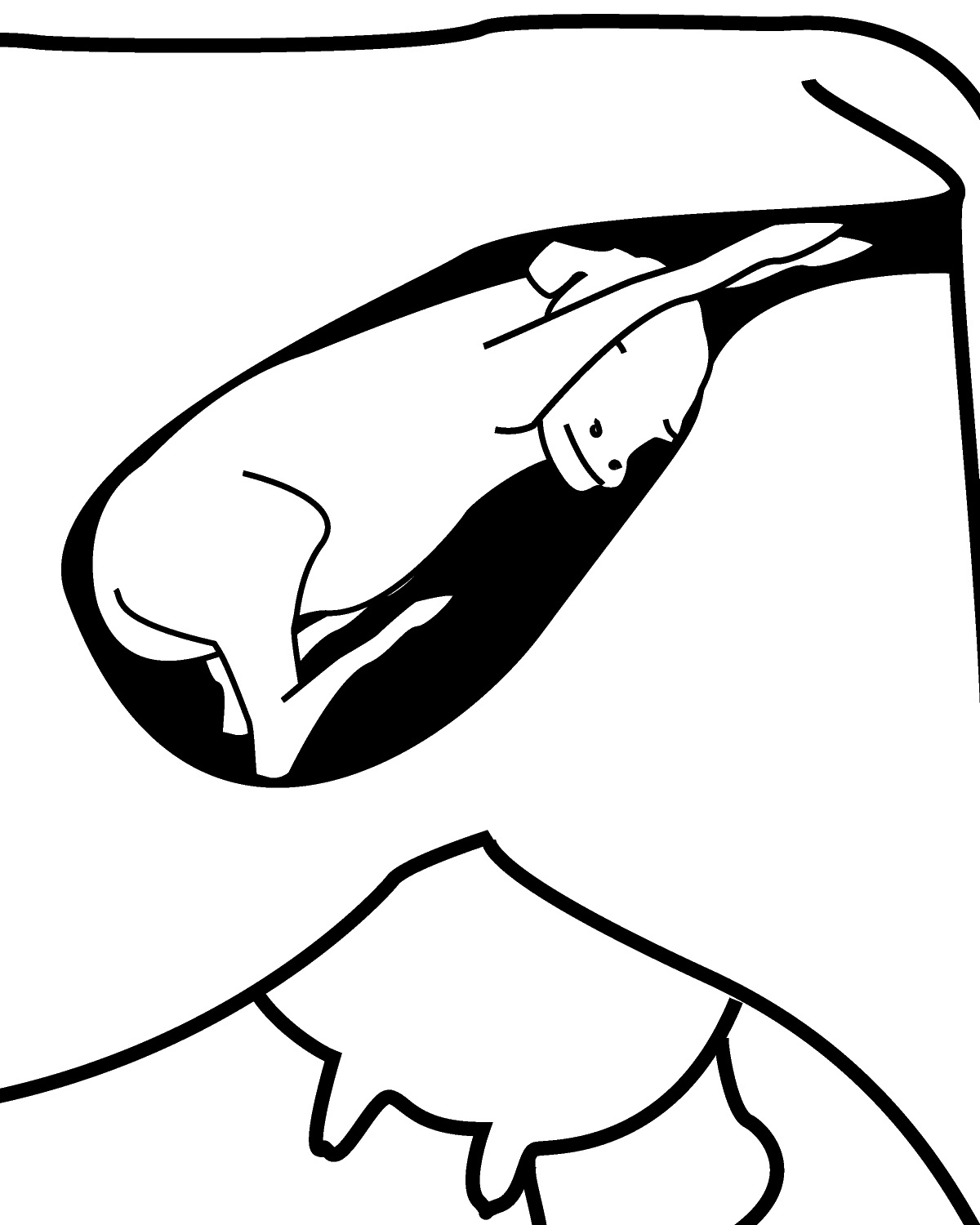
Figure half dozen. Two front legs presented with head back between legs
Head Out: One or Both Forelegs Retained
The calf may have the head out, but one or both forelegs retained (Figure 7). Secure the head by placing a chain or rope backside the poll and through the mouth and so lubricate the head and push it back into the uterus. Then search for the limbs 1 at a fourth dimension. Each limb should be grasped just above the fetlock and bent at the knee. Now push the aptitude knee toward the spinal column and push button back so as to bend all the joints of the limb. Meanwhile the manus is gradually moved down the limb toward the fetlock. Now enhance the fetlock over the pelvic brim and the leg tin movement forward.
If the mitt alone does not work, concatenation the fetlock. Push button the knee at the same fourth dimension and pull the rope. Cover the hoof to avert damage.
Figure 7. Dogie presented with its caput in the birth canal but i or both forelegs retained.
Breech Presentation
Effigy 8 shows a breech presentation. The calf has to be repelled well back into the uterus. Then grasp a leg beneath the stifle and work a mitt downward to the foot. Identify the hoof into the palm of your hand, withdrawing y'all arm until the foot is drawn over the pelvic brim. This manipulation is fabricated easier past rotating the hock outward every bit the human foot is pulled up and back.
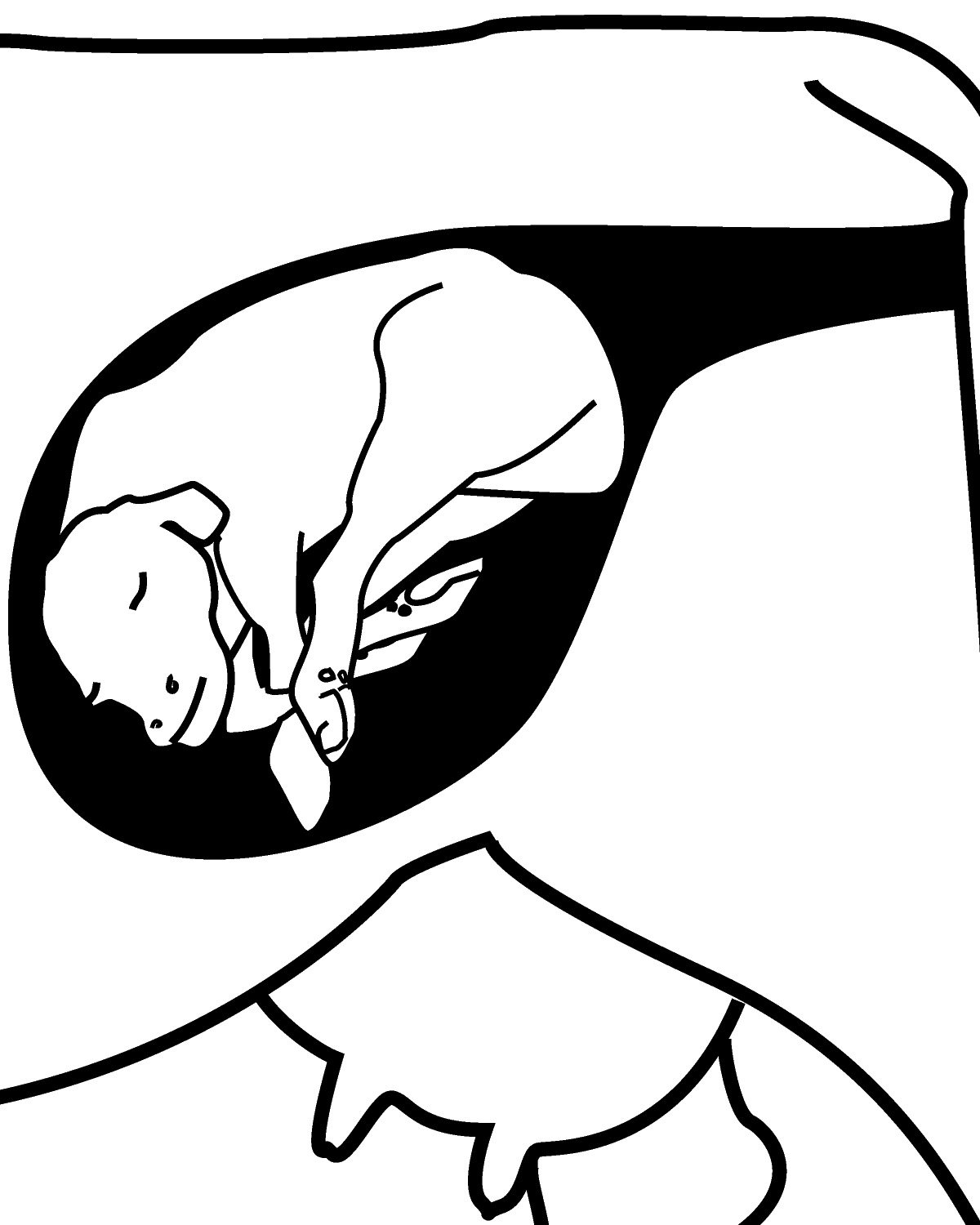
Figure viii. Dogie presented in breech position.
Twins
If twins enter the vagina one at a time, in that location is no problem. All the same, occasionally twins are presented together and block the birth canal. In most of these cases one comes head showtime and the other tail showtime (Figure 9). Excerpt the closest twin. If in dubiety, first excerpt the twin presenting hindlegs after first repelling the other twin far into the uterus.
Before this, make sure both limbs belong to the same dogie. To do this, feel along each limb to where it joins the body and experience along the body to the opposite limb. Rope each limb separately and identify the ropes for each twin. If ane or both twins are abnormally presented, correct as in a unmarried nativity earlier attempting commitment.
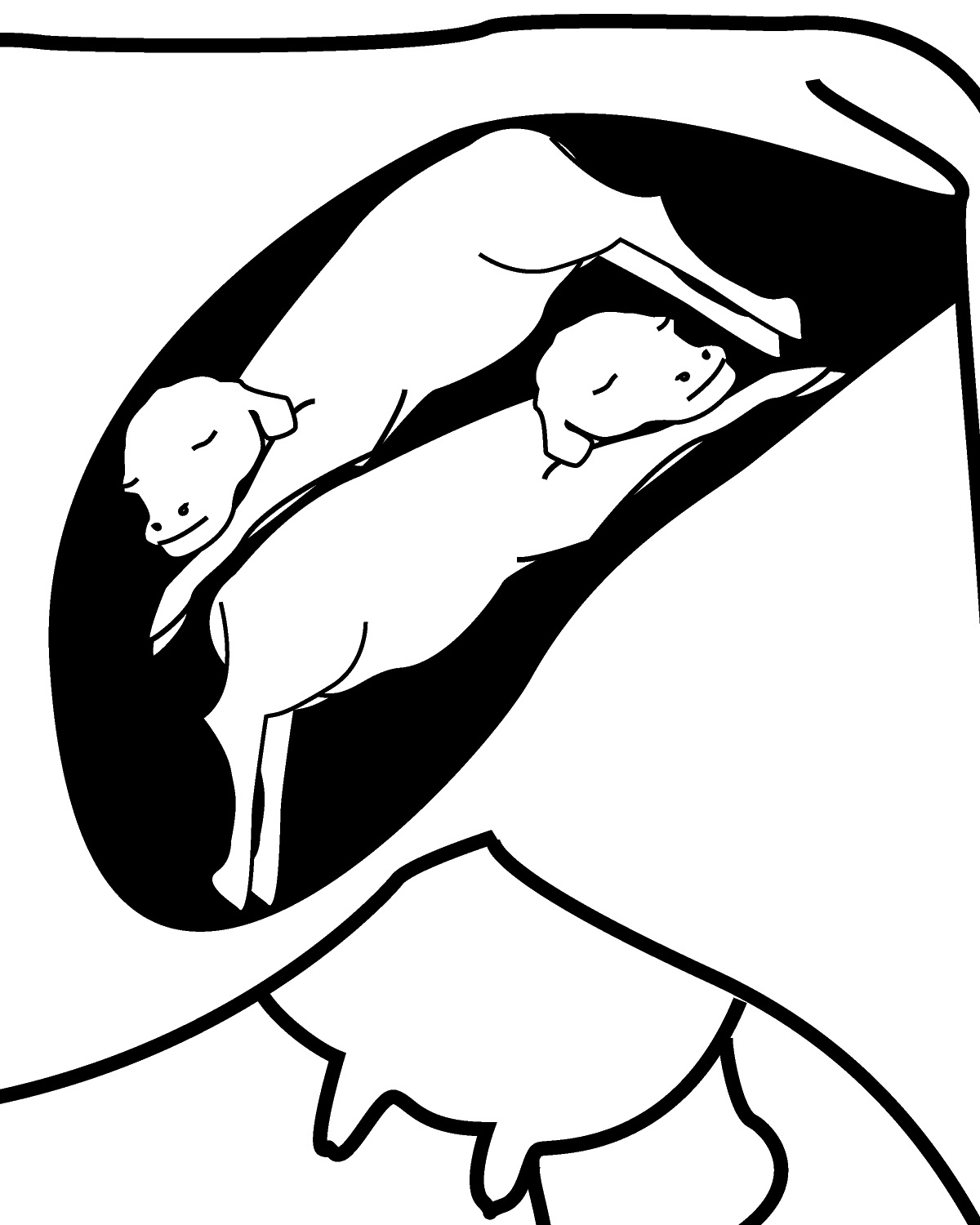
Effigy 9. Twin calves entering the nascence canal.
Rotating the Calf at Parturition to Aid in Delivery
Pulling on a dogie should only be done when the presentation and posture of the dogie are correct. This applies to both the anterior (forward) position (Figure 1) and the posterior (astern) position (Effigy 3). A large calf, with shoulders likewise broad for the pelvis, is sometimes held up at this stage (Effigy x). If so, pull one limb but so that the elbow and shoulder of ane limb only enter the pelvis. And then, while the pull on the limb is connected, the other limb is treated in the same way until both feet project every bit from the genital passage. Now employ traction on both limbs and on the head until the head protrudes from the vulva, and from this stage the principle traction is exerted on the limbs again. Information technology can be seen that traction on both limbs at the aforementioned fourth dimension volition issue in both shoulders inbound the pelvis at once.
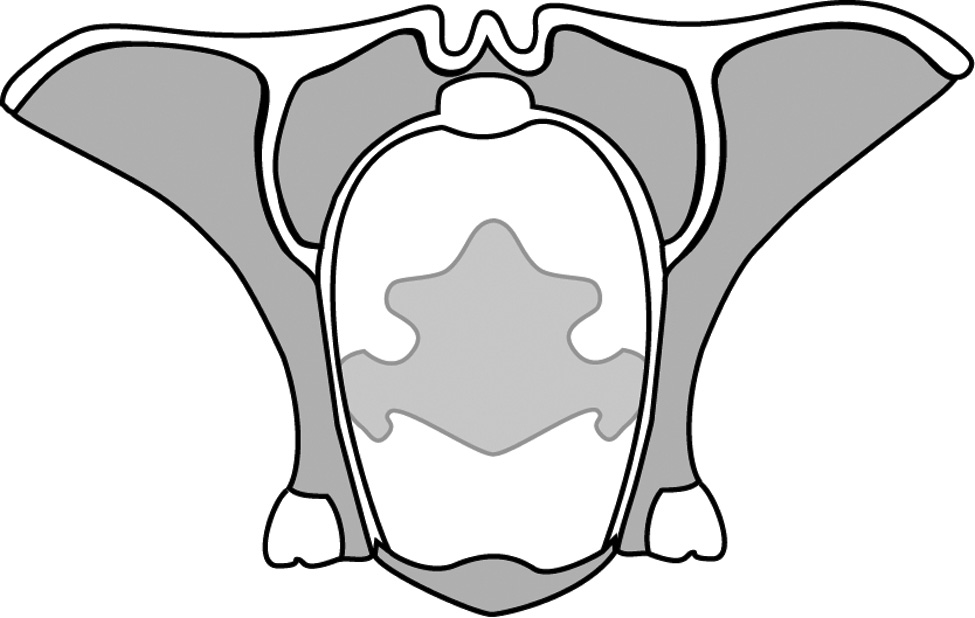
Effigy x. The shoulders or hips of a big calf may exist wider than the horizontal axis of the pelvic opening.
The pelvis has an oval shaped opening with the largest dimension existence the vertical axis, and the smaller dimension is the horizontal width. If the shoulders of a large nascency weight calf can be made to enter on a camber and tin be pulled through in that position, delivery will be fabricated easier. Apply traction that will allow the calf to be turned about 90 degrees so that the widest function of the shoulders will lucifer the largest dimension of the pelvic opening (Figure 11).
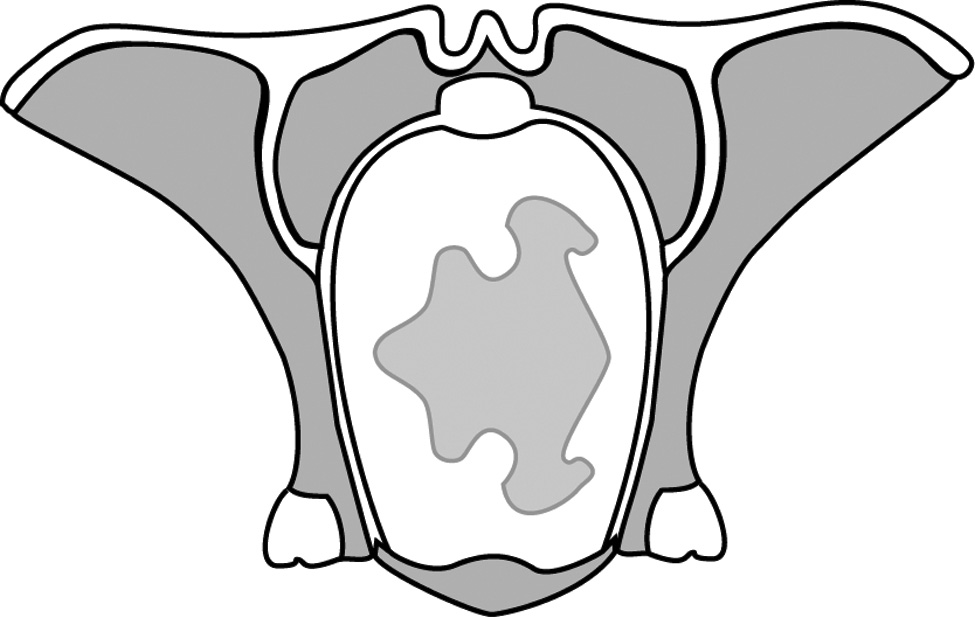
Figure 11. Rotation of the calf to lucifer the widest dimensions of dogie and pelvic opening.
Later on the shoulders take passed the pelvic opening, the calf can be returned to the normal upright position because the torso is larger in the vertical dimension (Figure 12).;
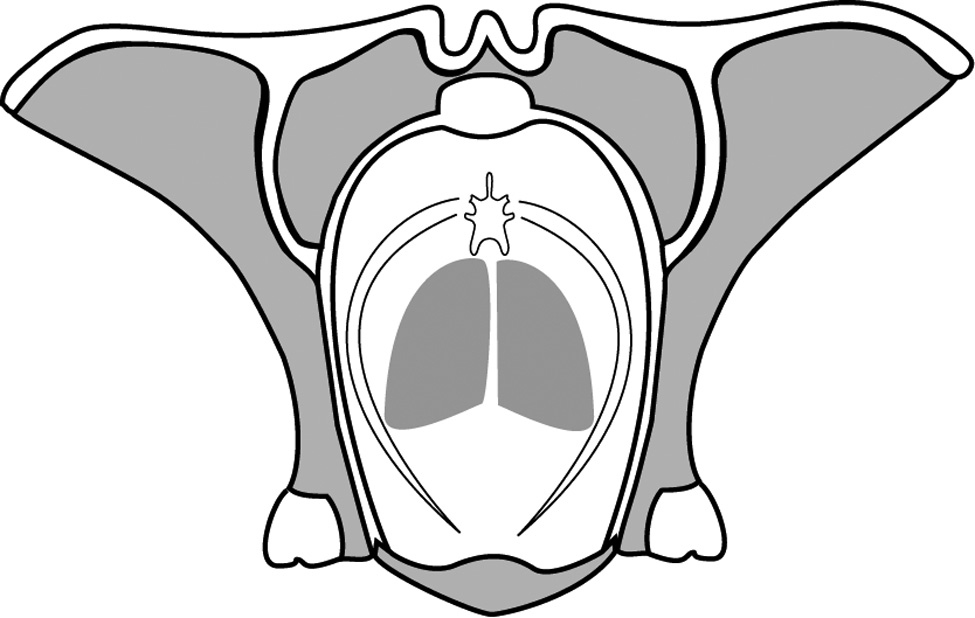
Figure 12. Rotating the calf back to the upright position to lucifer the depth of the thoracic cavit with the depth of the pelvic opening.
Hiplock is the next likely obstruction that is met when pulling a dogie. If the passage of the hind end of the calf presents whatsoever difficulty, the body of the calf should be grasped and twisted to an bending of about 45 degrees. Delivery is so made with the calf one-half-turned on its side. This allows for easier passage of a calf with well-developed stifle joints.
Prolapses
Prolapses occur occasionally in beef cows. About prolapses occur very nearly the time of calving. Two distinct kinds of prolapse exist.
Uterine prolapse requires immediate attention and if treated presently, near animals take an uneventful recovery. If they later rebreed and become meaning there is no reason to cull animals suffering uterine prolapse later calving. Uterine prolapse is not probable to reoccur. Some may endure uterine harm or infection that prevents formulation and should therefore be culled. If the uterus becomes badly traumatized before treating, the animal dies from shock or hemorrhage.
Vaginal prolapse, however, that which occurs before calving is a heritable trait and is probable to reoccur each year during late pregnancy. Such animals should non exist kept in the herd. The condition volition eventually effect in the loss of cow, calf, or both plus her female offspring would be predisposed to vaginal prolapse.
Enquiry (Patterson, et al, 1981) from the USDA station at Miles City, Montana, reported that 153 calvings of 13,296 calvings from a 14-yr span were associated with prolapse of the reproductive tract. Of those 153 prolapses, 124 (81%) were vaginal prolapses and 29 (19%) were uterine prolapses. The subsequent pregnancy charge per unit post-obit prolapse among outset dogie heifers was 28% and the pregnancy rate among adult cows following a prolapse was only 57.9%.
Table ii. Gestation table (based on 283 days)
| Breeding Engagement | Due Date | Breeding Appointment | Due Date | Breeding Engagement | Due Appointment | Convenance Date | Due Date | Breeding Appointment | Due Date | Breeding Date | Due Date |
|---|---|---|---|---|---|---|---|---|---|---|---|
| January 1 | Oct 10 | March 3 | Dec 10 | May 3 | Feb ix | July 3 | Apr 11 | Sept 2 | June 11 | Nov 2 | Aug 11 |
| Jan ii | Oct 11 | March four | Dec eleven | May 4 | Feb 10 | July 4 | April 12 | Sept three | June 12 | Nov 3 | Aug 12 |
| Jan 3 | October 12 | March 5 | Dec 12 | May 5 | Feb 11 | July five | April thirteen | Sept 4 | June 13 | Nov 4 | Aug thirteen |
| Jan four | October xiii | March 6 | Dec xiii | May 6 | Feb 12 | July 6 | April fourteen | Sept v | June 14 | Nov v | Aug 14 |
| Jan 5 | Oct 14 | March 7 | Dec 14 | May 7 | February xiii | July 7 | April xv | Sept 6 | June 15 | November 6 | Aug 15 |
| January vi | Oct 15 | March eight | December 15 | May 8 | Feb 14 | July 8 | April sixteen | Sept 7 | June 16 | Nov 7 | Aug 16 |
| Jan 7 | Oct sixteen | March 9 | Dec sixteen | May 9 | Feb 15 | July ix | Apr 17 | Sept viii | June 17 | Nov viii | Aug 17 |
| Jan 8 | October 17 | March 10 | December 17 | May 10 | Feb 16 | July 10 | April xviii | Sept ix | June 18 | Nov 9 | Aug 18 |
| Jan 9 | Oct eighteen | March eleven | December eighteen | May 11 | Feb 17 | July eleven | Apr nineteen | Sept ten | June 19 | Nov 10 | Aug 19 |
| Jan 10 | Oct 19 | March 12 | December 19 | May 12 | Feb xviii | July 12 | April 20 | Sept 11 | June 20 | November xi | Aug 20 |
| January 11 | Oct 20 | March 13 | Dec twenty | May xiii | February nineteen | July thirteen | April 21 | Sept 12 | June 21 | Nov 12 | Aug 21 |
| January 12 | Oct 21 | March xiv | December 21 | May fourteen | Feb 20 | July 14 | April 22 | Sept thirteen | June 22 | Nov 13 | Aug 22 |
| Jan 13 | Oct 22 | March 15 | Dec 22 | May xv | Feb 21 | July 15 | April 23 | Sept fourteen | June 23 | Nov 14 | Aug 23 |
| Jan 14 | October 23 | March 16 | Dec 23 | May 16 | February 22 | July 16 | April 24 | Sept 15 | June 24 | Nov 15 | Aug 24 |
| Jan xv | October 24 | March 17 | Dec 24 | May 17 | Feb 23 | July 17 | April 25 | Sept 16 | June 25 | November sixteen | Aug 25 |
| January sixteen D | Oct 25 | March 18 | Dec 25 | May eighteen | Feb 24 | July 18 | April 26 | Sept 17 | June 26 | Nov 17 | Aug 26 |
| Jan 17 | Oct 26 | March 19 | December 26 | May 19 | Feb 25 | July 19 | Apr 27 | Sept eighteen | June 27 | Nov 18 | Aug 27 |
| January 18 | Oct 27 | March xx | Dec 27 | May 20 | Feb 26 | July 20 | April 28 | Sept nineteen | June 28 | November nineteen | Aug 28 |
| Jan 19 | Oct 28 | March 21 | Dec 28 | May 21 | Feb 27 | July 21 | April 29 | Sept xx | June 29 | November 20 | Aug 29 |
| Jan twenty | October 29 | March 22 | December 29 | May 22 | Feb 28 | July 22 | April xxx | Sept 21 | June 30 | Nov 21 | Aug thirty |
| Jan 21 | October xxx | March 23 | Dec 30 | May 23 | March ane | July 23 | May i | Sept 22 | July 1 | Nov 22 | Aug 31 |
| Jan 22 | October 31 | March 24 | Dec 31 | May 24 | March 2 | July 24 | May 2 | Sept 23 | July 2 | November 23 | Sept 1 |
| Jan 23 | Nov 1 | March 25 | Jan 1 | May 25 | March 3 | July 25 | May 3 | Sept 24 | July 3 | Nov 24 | Sept 2 |
| Jan 24 | Nov 2 | March 26 | Jan 2 | May 26 | March four | July 26 | May four | Sept 25 | July 4 | Nov 25 | Sept 3 |
| January 25 | Nov iii | March 27 | January 3 | May 27 | March 5 | July 27 | May 5 | Sept 26 | July 5 | Nov 26 | Sept four |
| Jan 26 | Nov 4 | March 28 | Jan 4 | May 28 | March 6 | July 28 | May six | Sept 27 | July vi | Nov 27 | Sept five |
| Jan 27 | November 5 | March 29 | January 5 | May 29 | March 7 | July 29 | May 7 | Sept 28 | July 7 | Nov 28 | Sept 6 |
| Jan 28 | Nov 6 | March 30 | Jan 6 | May 30 | March 8 | July xxx | May 8 | Sept 29 | July eight | Nov 29 | Sept 7 |
| January 29 | Nov 7 | March 31 | Jan 7 | May 31 | March ix | July 31 | May nine | Sept 30 | July 9 | Nov xxx | Sept eight |
| Jan 30 | Nov 8 | April one | January 8 | June 1 | March x | Aug 1 | May 10 | October one | July 10 | Dec ane | Sept 9 |
| Jan 31 | Nov nine | April 2 | Jan 9 | June 2 | March 11 | Aug 2 | May 11 | October 2 | July xi | December two | Sept 10 |
| Feb 1 | Nov 10 | Apr 3 | Jan 10 | June iii | March 12 | Aug 3 | May 12 | Oct three | July 12 | December 3 | Sept eleven |
| Feb ii | Nov 11 | Apr 4 | Jan 11 | June 4 | March 13 | Aug 4 | May xiii | Oct 4 | July 13 | December four | Sept 12 |
| Feb 3 | November 12 | April v | Jan 12 | June 5 | March 14 | Aug 5 | May 14 | Oct v | July xiv | Dec 5 | Sept 13 |
| Feb 4 | Nov thirteen | Apr 6 | Jan thirteen | June 6 | March xv | Aug 6 | May fifteen | Oct 6 | July 15 | Dec 6 | Sept 14 |
| Feb 5 | Nov 14 | April seven | Jan xiv | June 7 | March 16 | Aug 7 | May 16 | Oct 7 | July xvi | December 7 | Sept 15 |
| Feb 6 | Nov xv | April 8 | January xv | June viii | March 17 | Aug 8 | May 17 | Oct 8 | July 17 | Dec viii | Sept xvi |
| February 7 | Nov 16 | April 9 | Jan 16 | June 9 | March 18 | Aug 9 | May 18 | Oct ix | July 18 | Dec 9 | Sept 17 |
| Feb 8 | November 17 | April 10 | Jan 17 | June 10 | March 19 | Aug 10 | May 19 | Oct x | July 19 | Dec 10 | Sept 18 |
| Feb ix | Nov 18 | April 11 | Jan 18 | June xi | March 20 | Aug xi | May xx | October 11 | July twenty | Dec 11 | Sept 19 |
| February 10 | Nov 19 | April 12 | January nineteen | June 12 | March 21 | Aug 12 | May 21 | Oct 12 | July 21 | Dec 12 | Sept 20 |
| Feb eleven | Nov 20 | April xiii | January xx | June thirteen | March 22 | Aug 13 | May 22 | Oct 13 | July 22 | December 13 | Sept 21 |
| Feb 12 | Nov 21 | April 14 | Jan 21 | June 14 | March 23 | Aug 14 | May 23 | Oct fourteen | July 23 | December fourteen | Sept 22 |
| February 13 | Nov 22 | April xv | Jan 22 | June 15 | March 24 | Aug fifteen | May 24 | October 15 | July 24 | Dec 15 | Sept 23 |
| Feb 14 | November 23 | April 16 | Jan 23 | June sixteen | March 25 | Aug 16 | May 25 | October sixteen | July 25 | December 16 | Sept 24 |
| February fifteen | Nov 24 | April 17 | Jan 24 | June 17 | March 26 | Aug 17 | Nay 26 | Oct 17 | July 26 | December 17 | Sept 25 |
| Feb 16 | November 25 | Apr 18 | Jan 25 | June 18 | March 27 | Aug eighteen | May 27 | October xviii | July 27 | Dec 18 | Sept 26 |
| Feb 17 | Nov 26 | April 19 | Jan 26 | June 19 | March 28 | Aug 19 | May 28 | Oct xix | July 28 | December 19 | Sept 27 |
| Feb 18 | Nov 27 | April xx | Jan 27 | June 20 | March 29 | Aug xx | May 29 | Oct 20 | July 29 | December twenty | Sept 28 |
| Feb nineteen | Nov 28 | April 21 | Jan 28 | June 21 | March 30 | Aug 21 | May thirty | Oct 21 | July thirty | Dec 21 | Sept 29 |
| Feb twenty | Nov 29 | April 22 | Jan 29 | June 22 | March 31 | Aug 22 | May 31 | Oct 22 | July 31 | Dec 22 | Sept xxx |
| Feb 21 | Nov 30 | April 23 | Jan xxx | June 23 | April one | Aug 23 | June 1 | October 23 | Aug 1 | December 23 | Oct i |
| Feb 22 | Dec i | April 24 | Jan 31 | June 24 | April 2 | Aug 24 | June 2 | October 24 | Aug 2 | Dec 24 | Oct 2 |
| Feb 23 | December ii | April 25 | February 1 | June 25 | April 3 | Aug 25 | June iii | October 25 | Aug three | December 25 | Oct3 |
| Feb 24 | Dec three | Apr 26 | February two | June 26 | Apr 4 | Aug 26 | June four | Oct 26 | Aug iv | Dec 26 | Oct 4 |
| February 25 | Dec four | Apr 27 | February 3 | June 27 | April 5 | Aug 27 | June v | Oct 27 | Aug 5 | Dec 27 | Oct 5 |
| Feb 26 | Dec v | April 28 | February four | June 28 | April 6 | Aug 28 | June vi | October 28 | Aug vi | December 28 | Oct half dozen |
| Feb 27 | Dec six | Apr 29 | Feb 5 | June 29 | Apr seven | Aug 29 | June vii | Oct 29 | Aug seven | Dec 29 | Oct 7 |
| Feb 28 | Dec 7 | Apr 30 | Feb 6 | June 30 | April 8 | Aug 30 | June 8 | Oct 30 | Aug 8 | December 30 | Oct 8 |
| March 1 | Dec 8 | May one | Feb 7 | July 1 | April 9 | Aug 31 | June 9 | Oct 31 | Aug nine | December 31 | Oct 9 |
| March ii | Dec nine | May 2 | February eight | July two | April x | Sept 1 | June 10 | Nov 1 | Aug10 |
Summary
Many calving difficulties could exist eliminated past proper evolution of replacement heifers and/or breeding first calf heifers to bulls that will sire calves with below average birth weights. Of about importance is to know when to aid, when to quit, and when it is time to call the veterinary. Call up the length of stage 2 of parturition is important to calf survival and if a problem cannot exist corrected inside xx to 30 minutes, you should seek assist. To learn more about how to assistance cows or heifers at calving, bank check out ii videotapes bachelor from your local OSU Extension Function. These two videos are chosen VT-323 Calving Management-Parturition and VT-324 Calving Management-Dystocia. In the second video (VT-324), Dr. Larry Rice, Professor-Emeritus, demonstrates how to check for cervical dilation.
References
Doornbos, D.East., R.A. Bellows, P.J. Burfening and B.W. Knapp. 1984. Effects of dam age, prepartum nutrition, and duration of labor on productivity and postpartum reproduction in beefiness females. Journal of Animal Scientific discipline. Vol. 59: pp 1-ten.
Patterson, D.J., R.A. Bellows, and P.J. Burfening. 1981. Effects of caesarean section, retained placenta, and vaginal or uterine prolapse on subsequent fertility in beefiness cattle. Journal of Animal Scientific discipline. Vol. 53: pp 916.
Putnam, M.R., L.E. Rice, R.P. Wettemann, K.S. Lusby, and B. Pratt. 1985. Clenbuterol (PlanipartTM) for the postponement of parturition in cattle. Theriogenology. Vol 24. No. 4. pp 385-393.
Glenn Selk
Professor Emeritus
Was this information helpful?
YESNO
Source: https://extension.okstate.edu/fact-sheets/calving-time-management-for-beef-cows-and-heifers.html
0 Response to "How Long After Heifer Calves B4 Bred Again"
ارسال یک نظر